“Vi Lang”: FPT University students develop a cultural experience model based on Northern Vietnamese village materials
Using familiar cultural materials such as rural markets, folk games, and traditional crafts, a group of students from FPT University Hanoi built the project "Vi Lang – Touching the beauty of the old village, preserving the soul of the North". Not only creating a space that recreates rural life, the project also shows how young people apply creative thinking to design cultural experiences that are accessible, interactive, and suitable for the current needs of students.
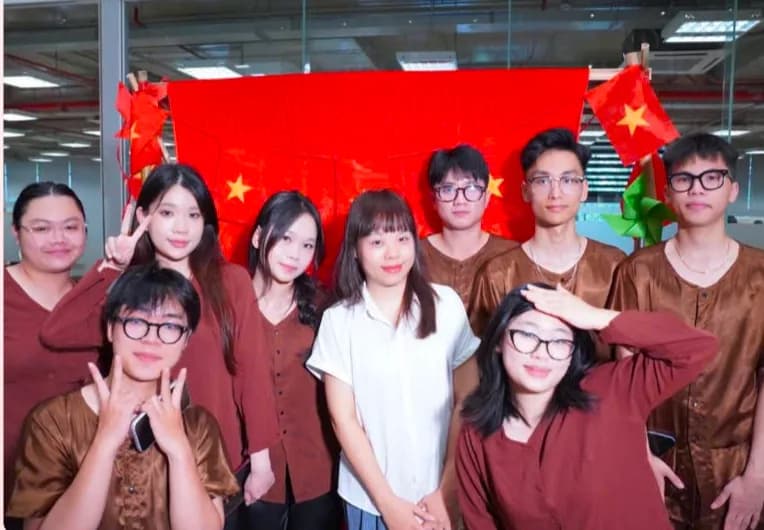
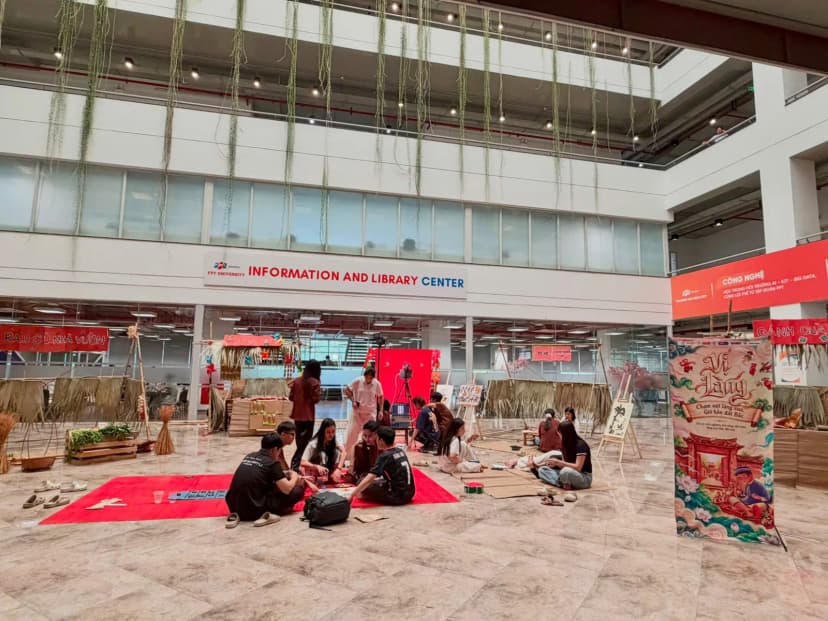
On November 2, 2026, at FPT University Hanoi, the “Vi Lang” project brought a space of Northern cultural experiences with many unique activities. Using the concept of “A day as an ancient villager” as the core, the program takes participants on a journey to explore traditional life through role-playing, folk games, and craft practices.
The project received attention and support from numerous students, while opening up a perspective on how traditional cultural values can be creatively exploited to form experience activities in an educational environment.
From the challenge of cultural access to creative experience ideas
In Vietnamese cultural life, the Northern village is not only a place of residence but also a place that preserves many values associated with customs, habits, community life, and traditional crafts. From village markets and communal yards to folk handicraft products, each image reflects a part of the life and cultural identity formed over many generations.
However, as the pace of modern life continues to develop, how young people access these values has also changed significantly. Traditional culture still exists in books, museums, exhibitions, and digital platforms, but the opportunity to directly participate in folk activities is not always easy.
Recognizing the gap between receiving information and practical experience, a group of students from FPT University Hanoi chose to develop the “Vi Lang” project by combining cultural content with interactive activities.
Instead of just building an exhibition space, the group designed a journey so that participants can directly role-play, complete tasks, and discover the characteristics of Northern village life.
The highlight of this idea lies in transforming traditional cultural materials into structured experience activities, creating opportunities for young people not only to learn but also to actively participate and feel.
Designing an experience journey from folk cultural values
Adopting the “A day as an ancient villager” concept, Vi Lang is built as a short experience journey lasting about 15–20 minutes, where participants explore spaces simulating Northern village life in sequence.
Right from the start, each person receives an “Ancient Villager ID Card,” which acts as an identification item and the beginning of the role-playing journey. At the experience areas, players perform interactive tasks and receive verification stamps after completing challenges.
This design approach creates a connection between individual activities, helping participants have a cohesive exploration journey rather than just visiting separate areas.
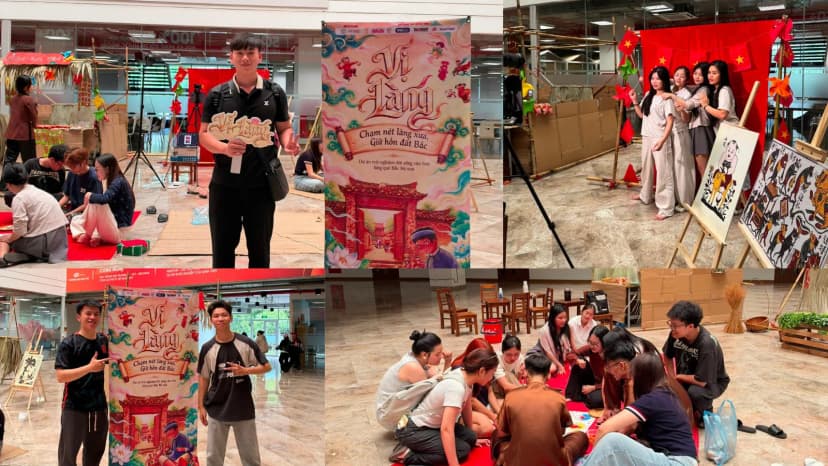
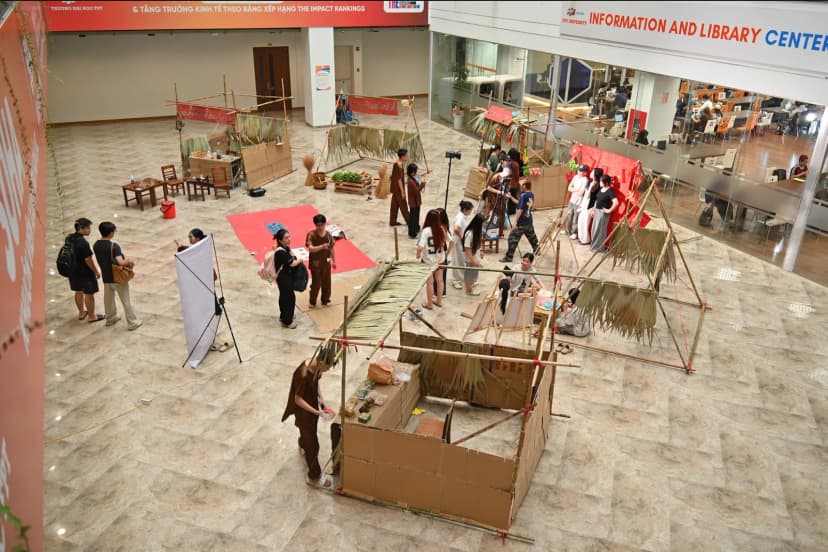
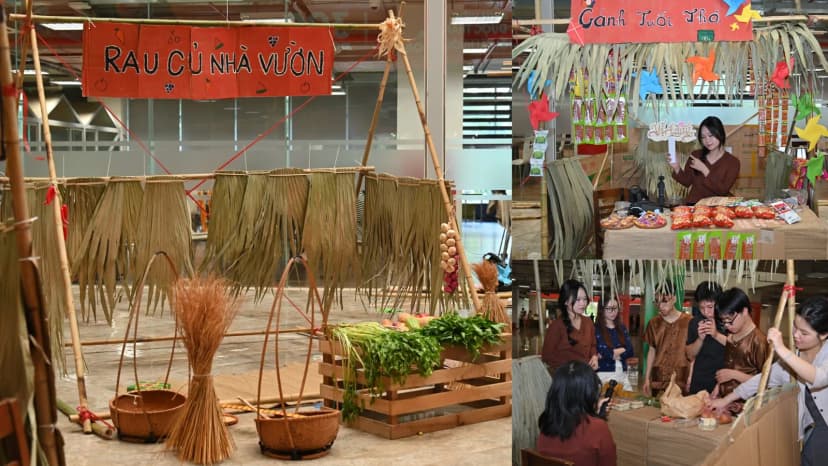
The entire space is divided into three main areas: Village Market Session, Communal Yard Festival, and Rural Craft Traditions, representing different aspects of traditional cultural life.
At the Village Market Session, small vendor stalls, tea shops, rural snacks, folk toys, and home-grown produce are recreated to introduce the familiar trading atmosphere of Northern Vietnamese people. The market session not only reflects buying and selling activities but also embodies the beauty of communication, daily life, and community connection culture.
Meanwhile, the Communal Yard Festival focuses on exploring folk games such as O an quan (mandarin square capturing), pot smashing, pick-up sticks, crab-fish-shrimp-tiger dice, stilts, and jump rope. Through interactive challenges, students have the opportunity to learn about forms of play that were once tied to the spiritual life of many generations.
The Rural Craft Traditions area focuses on values created through ingenuity and creativity in manual labor. Activities such as printing Dong Ho paintings, molding Xuan La to he (traditional dough figurines), and painting clay statues allow participants to directly try their hand at folk art forms, rather than just observing finished products.
Combining these three experiential spaces creates a journey with diverse content that is both entertaining and helps participants discover cultural aspects of Northern Vietnamese villages.
Experience design thinking in a student project
Beyond cultural value, Vi Lang also demonstrates how students approach building and organizing a project aimed at the needs of participants.
First, the project clearly defines the target audience as students, who are often interested in social activities, practical experiences, interactive games, and spaces to preserve memories with friends.
Based on these characteristics, the activities are designed to be accessible, have appropriate duration, and do not require participants to have in-depth knowledge of traditional culture.
Second, instead of introducing activities sporadically, the team built a journey with a starting point, tasks in each area, and a result verification method. The role-playing element and completing challenges contribute to motivating participants to actively explore the entire space.
Third, cultural values are conveyed through practical activities. Directly playing O an quan, experiencing Dong Ho painting, or exploring a small vendor stall helps participants access traditional living habits through personal experience.
From the perspective of experience product design, these are notable factors in building a cultural activity for young audiences: identifying participant needs, selecting appropriate content, and creating an interactive, interconnected journey.
Not only helping students approach culture, the project development process is also an opportunity for the team to apply skills in ideation, planning, activity organization, and communication in practice.
Opening up new approaches for cultural activities in the university environment
In the context of the increasingly diverse experiential needs of young people, projects like Vi Lang suggest the possibility of combining cultural education, community activities, and experience design thinking.
Instead of just transmitting knowledge in a one-way manner, this model puts the participant at the center of the activity, encouraging initiative in learning and direct interaction with traditional cultural materials.
Notably, Vi Lang uses familiar images from folk life to create a structured experience, suitable for school spaces and the participation needs of students.
This approach also offers suggestions for developing cultural experience programs in the future. If further researched and perfected in terms of content, organization processes, and participant feedback assessment, similar models could be considered for application in education, cultural exchange, or community events.
However, the immediate value of Vi Lang does not lie in its commercialization potential but in creating a practical experience opportunity where cultural knowledge is conveyed in a way that is close to the younger generation.
With the message “Touching the old village, Preserving the Northern soul”, the student group from FPT University Hanoi hopes to spread interest in traditional cultural values while encouraging young people to actively explore and preserve folk beauty.
From rural market sessions, childhood games to traditional crafts, Vi Lang shows that a cultural idea can be developed into a specific experiential journey through the organizational thinking and creativity of students.
The project is not only an activity to recreate the rural life of Northern Vietnam, but also a testament to how young people can connect cultural values with modern forms of experience, contributing to creating more opportunities for traditional culture to continue to be present in community life.